Trip Facts

icon-calendar
Trip Duration 11 Days
icon-meter
Trip Difficulty Moderate
icon-mountain
Maximum Altitude 3,710 m/12,171ft.
icon-season
Best Season To Visit March-May, September-November
icon-group
Average Group Size 2-15 pax

Trip Overview

Lower Mustang Loop Trek: Scenic Himalayan Adventure with Rich Culture

The Lower Mustang Loop Trek is one of Nepal’s most scenic and culturally rich trekking adventures. Located in the northern Annapurna region, the Lower Mustang Loop Trek offers an incredible blend of dramatic Himalayan landscapes, Tibetan villages, and sacred spiritual sites. This trek provides a moderate challenge and is perfect for travelers seeking both cultural depth and stunning natural beauty without extreme altitudes.

Travelers on the Lower Mustang Loop Trek explore a remote yet accessible region of Nepal, walking through expansive valleys, ancient monasteries, and traditional Tibetan Buddhist settlements. The unique cultural heritage and breathtaking scenery make the Lower Mustang Loop Trek an unforgettable journey.

What to Expect on the Lower Mustang Loop Trek

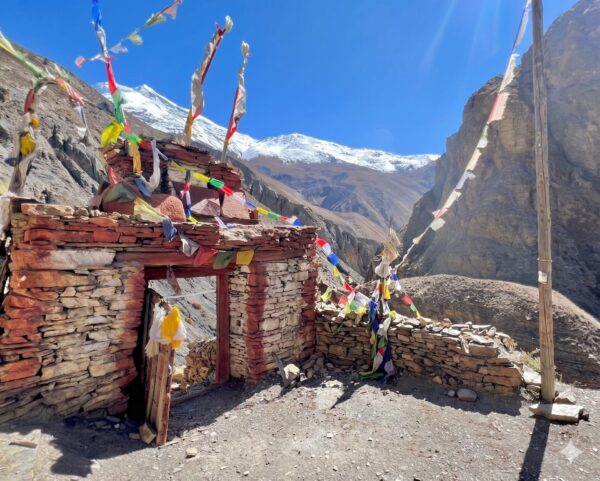
Starting near Jomsom, the Lower Mustang Loop Trek follows a clearly marked trail through rugged, arid valleys and historic mountain villages. These villages were once vital stops on ancient trans-Himalayan trade routes. Along the Lower Mustang Loop Trek, trekkers encounter sacred mani walls, colorful prayer flags, and stone houses that reveal the region’s deep spiritual roots.

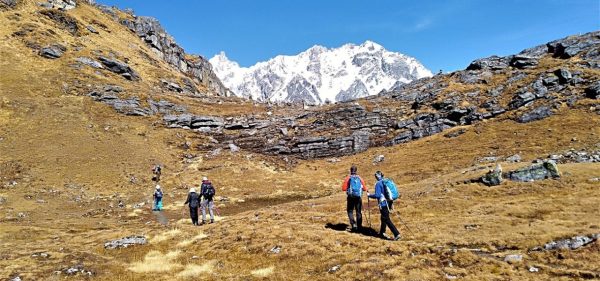
Unlike other lush trekking routes in Nepal, the Lower Mustang Loop Trek offers stark beauty with wind-sculpted plateaus and vast open spaces. This dramatic landscape gives trekkers a fresh and captivating experience unique to the Lower Mustang Loop Trek.

Why Choose Lower Mustang Loop Trek with Nepal Sanctuary Treks?

At Nepal Sanctuary Treks, we provide a personalized Lower Mustang Loop Trek experience. With over 27 years of expertise in the field, we craft custom Lower Mustang Loop Trek itineraries to suit your pace and preferences. Our experienced trekking guides bring invaluable knowledge, offering insights into the rich local culture while ensuring your safety throughout the journey. Our professional team has trekked the Lower Mustang Loop Trek many times and knows the region inside out.

We focus on small group sizes and rigorous safety protocols, providing you with personalized attention and safety. Our long-standing partnerships with trusted suppliers ensure you have carefully selected accommodations and reliable transportation during your Lower Mustang Loop Trek . Our goal is to provide a stress-free and safe trekking experience for every trekker.

As a Travelife Certified company, we are dedicated to promoting sustainable and eco-friendly travel. When you choose our Lower Mustang Loop Trek , you support local communities and help minimize environmental impacts, making responsible tourism a key part of your adventure. Your safety, comfort, and unforgettable experience are our top priorities.

Contact us today to plan your custom Lower Mustang Loop Trek.

This is a sample itinerary of the Lower Mustang Loop Trek . We shall customize the program as per your needs and preferences.

Trip Itinerary

Day 01: Arrive at Kathmandu

Altitude above sea level: 1,302 m / 4,269 ft.
Driving Time: Approx. 30 minutes, depending on traffic conditions.
Accommodation: Hotel Tibet or similar
Upon your arrival at Tribhuvan International Airport in Kathmandu, you will be warmly welcomed by our representative, who will be holding a “Nepal Sanctuary Treks” sign outside the terminal to greet you. You will be transferred to your hotel in a private vehicle. After checking in and freshening up, our representative will meet you to give a detailed briefing on the upcoming itinerary, along with important safety guidelines and hygiene practices to ensure a smooth trek.

Day 02: Cultural Introductory Tour and Trek preparation

Altitude above sea level: 1,302 m / 4,272 ft. – Kathmandu
Accommodation: Hotel Tibet or similar
Meal: Breakfast
It’s also a spare day in case of bad weather in Lukla if we could not fly on the scheduled date and time, or we can organize a guided day tour in or around Kathmandu.

9:00 AM: Guided Cultural Tour of Kathmandu Valley
Start your day with a guided cultural tour around Kathmandu Valley. Explore the vibrant Kathmandu with our expert guides, who will share insights into the area’s rich history.

Kathmandu Durbar Square
Visit Kathmandu Durbar Square (Hanuman Dhoka Durbar), a historical royal complex with temples, palaces, and shrines dating back to the 15th century. Key attractions include Kumari Ghar (the house of the living goddess) and Kasthamandap, built from a single tree.

Swayambhunath (Monkey Temple)
Next, head to Swayambhunath, the Monkey Temple, a sacred site for both Hinduism and Buddhism. Admire the stunning white dome and golden spire, while soaking in the serene atmosphere filled with incense and prayer wheels.

PM: Boudhanath Stupa
Visit the massive Boudhanath Stupa, a UNESCO World Heritage Site. It’s a spiritual center for Tibetan culture, surrounded by prayer flags, monks, and devotees chanting ‘Om Mani Padme Hum’.

Pashupatinath Temple
Conclude your tour at the Pashupatinath Temple, one of the most sacred Hindu temples, located along the Bagmati River. Here, you can witness profound spiritual rituals, including the moving sight of open-air cremations, which hold deep cultural significance. After immersing yourself in this sacred experience, you will transfer back to your hotel.

Day 03: Flight to Pokhara

Altitude above sea level: 895 m / 2,936 ft. – Pokhara
Flight duration: Approximately 25 minutes
Accommodation: Mount Kailash Resort or similar
Meal: Breakfast

This morning, you will transfer to the domestic airport for a short flight to Pokhara. On clear days, the flight gives you stunning views of the Annapurna mountain range. After you arrive in Pokhara, you will go to your hotel and check in. You can then relax or spend the afternoon exploring the city at your own pace.

Day 04: Flight to Jomsom - Drive to Marpha village - Hike to Tiri village via Dhumba Lake

Altitude Above Sea Level: 2,900 m / 9,514 ft. – Thini
Flight Duration: Approximately 20 minutes (Pokhara to Jomsom)
Driving Duration: 30 minutes approx.
Ascent: 250 m / 820 ft.
Descent: 80 m / 262 ft.
Hiking Duration: 3 hours approx. (8 km / 4.97 mi)
Accommodation: Tea House Lodge
Meals: Breakfast, Lunch, and Dinner

Start your day with an early scenic flight to Jomsom (2,800 m / 9,186 ft), the lively gateway to Mustang, where you enjoy sweeping views of rugged Himalayan peaks and deep river valleys.

From Jomsom, you drive to Marpha village and begin your hike toward Chhairo. There, you visit Chhairo Gompa, a Tibetan-style Buddhist monastery built in the 1600s.

Next, you continue hiking to Dhumba Lake, a sacred natural lake at the base of Mount Nilgiri, about 5 km from Jomsom. Prayer flags surround the fenced lake, which is tied to a local legend that its waters once turned red and only returned to normal after long Tibetan Buddhist ceremonies. Locals regard the lake as sacred and do not eat its fish. Nearby, you take a short 15-minute uphill walk to Kuchup Terenga Gompa (approx. 2,900 m / 9,514 ft), where rituals use water from the lake as offerings. The area offers a peaceful setting with snow-capped peaks and wide valley views, and the gompa provides a 360° panoramic view.

From Dhumba Lake, you continue to Thini Village, known for its apple orchards and traditional mud houses, offering insight into Mustang culture. The village overlooks the historic salt trade route between Tibet and Nepal. You then transfer to your lodge for an overnight stay.

Day 05: Trek to Lubra

Altitude Above Sea Level: 2,972 m / 9,754 ft. – Lubra
Hiking Duration: 4–5 hours approx. (10 km / 6 mi)
Ascent: 300 m / 984 ft.
Descent: 450 m / 1,476 ft.
Accommodation: Tea House Lodge
Meals: Breakfast, Lunch, and Dinner

After breakfast, you continue your journey toward Lubra and climb to a ridge overlooking Phalyak village.

You then begin a long scenic descent into the arid Panda Khola gorge, leading to the remote Lubra Village, one of the last strongholds of the pre-Buddhist Bon religion. This 12th-century settlement is home to a Bon community that has preserved its ancient traditions.

You explore Lubra Gompa monastery and walk through the village’s traditional stone and mud houses with thatched roofs, experiencing the authentic culture and history of Mustang.

Day 06: Trek to Muktinath

Altitude Above Sea Level: 3,710 m / 12,172 ft. — Muktinath
Hiking Duration: 3-4 hrs (8 km / 5 mi)
Ascent: 740 m / 2,428 ft.
Accommodation: Tea House Lodge
Meals: Breakfast, Lunch, and Dinner

After breakfast, you begin your trek along a scenic ridge with sweeping panoramic views of Himalayan giants, including Mt. Dhaulagiri (8,167 m / 26,795 ft), Nilgiri Peak (7,061 m / 23,168 ft), Tilicho Peak (7,134 m / 23,406 ft), and Annapurna I (8,091 m / 26,545 ft).

You follow a trail that winds through barren hills and gradually ascends to the sacred pilgrimage town of Muktinath. This revered site holds deep spiritual significance for both Hindus and Buddhists. Nestled in a peaceful grove, Muktinath is home to a Buddhist gompa and the iconic pagoda-style Jwala Mai Temple, which houses an image of Lord Vishnu.

For Buddhists, the area is known as Chumig Gyatsa, meaning “A Hundred Waters,” reflecting its importance as a sacred and tranquil Himalayan retreat.

Day 07: Trek to Kagbeni via Jhong

Altitude Above Sea Level: 2,810 m / 9,219 ft. — Kagbeni
Trekking Duration: 3-4 hours approx. (12.58 km / 7.8 mi)
Ascent: 145 m / 476 ft.
Descent: 973 m / 3,192 ft.
Accommodation: Tea House Lodge
Meals: Breakfast, Lunch, and Dinner

After breakfast, you begin your Upper Mustang trek to Kagbeni, a historic trading village located at the confluence of the Jhong and Kali Gandaki Rivers.

The scenic Himalayan trail passes through traditional Upper Mustang villages such as Chhyongkhar and Jhong, offering stunning views of the Annapurna and Dhaulagiri ranges. Along the way, you see local livestock grazing and experience authentic Mustang village life.

In Kagbeni, you explore the ruins of a 16th-century fortress that once controlled ancient trade routes. You then spend the afternoon visiting the village and the famous Red Monastery, founded in 1429, an important spiritual site and former school for young Buddhist monks. This Upper Mustang cultural trek offers insight into Nepal’s remote Himalayan heritage and the traditions of Bon-Buddhist communities.

Day 08: Hike to Tiri -Drive back to Jomsom

Altitude Above Sea Level: 2,800 m / 9,186 ft. — Jomsom
Hiking Duration: 2 hours approx. (5.43 km / 3.4 mi)
Ascent: 217 m / 712 ft.
Descent: 217 m / 712 ft.
Driving Duration: 1 hour approx.
Accommodation: Tea House Lodge
Meals: Breakfast, Lunch, and Dinner

After breakfast, you take a scenic day trek from Kagbeni to Tiri Village in Upper Mustang, home to an 800-year-old nunnery. The trail follows the Kali Gandaki River, passing fields of wheat, barley, and buckwheat, with beautiful views of the Himalayas.

Along the way, you pass sacred burial chortens, mani stones, and wide panoramic landscapes. You visit an ancient gompa decorated with prayer flags and enjoy views of Tangbe village, with its green fields and red monasteries.

You then return to Kagbeni and continue with a scenic drive to Jomsom, completing your cultural and Himalayan trekking experience.

Day 09: Flight to Pokhara- Kathmandu

Flight Duration: Jomsom to Pokhara (20 minutes), Pokhara to Kathmandu (25–30 minutes)
Accommodation: Hotel Tibet or similar
Meals: Breakfast

After an early breakfast, you walk to the nearby Jomsom airport and take a short flight to Pokhara, enjoying one last view of the stunning Himalayas.

From Pokhara, you take a connecting flight to Kathmandu. After you arrive and check in at your hotel, you spend the afternoon relaxing or exploring the city. You can rest or shop for local handicrafts and souvenirs before concluding your unforgettable trek.

Day 10: Buffer Day

Accommodation: Hotel Tibet or similar
Meals: Breakfast

This day also serves as a buffer in case bad weather in Jomsom delays your flight schedule. Upon arrival in Kathmandu, you enjoy some free time to relax or explore the city at your own pace.

Day 11: Final Departure

Meal: Breakfast

As your unforgettable Nepal adventure concludes, it’s time to fly home, taking with you cherished memories of the Himalayas and local culture. A representative from Nepal Sanctuary Treks will escort you to Tribhuvan International Airport (TIA). Please ensure you arrive at least three hours before your scheduled flight for a smooth check-in and departure.

Price Included

What's Included

  • Private airport transfers,
  • Internal flight Kathmandu-Pokhara-Jomsom- Pokhara-Kathmandu
  • 3 nights in Hotel Tibet or similar in Kathmandu with breakfast,
  • 1 night in Mount Kailash Resort or similar in Pokhara with breakfast
  • Guided Kathmandu sightseeing tour with entrance fees
  • Tea house lodge during the trek on full board
  • Restricted Area Permits, ACAP
  • Staff insurance on the trek,
  • Trek guide & porter/s
  • Duffel bag
  • Map

What's not Included

  • Lunch and Dinner in Kathmandu, Pokhara (approx. US$ 20 per day
  • Beverages
  • Personal equipment,
  • Personal bills,
  • International airfare
  • Excess baggage beyond 15 kilos including day pack Visa fee: US$ 30 for 15 days and US$ 50 for 30 days multiple entries
  • Insurance (for cancellation, accident, health, emergency evacuation and loss, theft of or damage to baggage and personal effects),
  • Liability Insurance
  • Tips

Trip Important Notes

Physical Fitness required for Lower Mustang Loop Trek

The Lower Mustang Loop Trek is moderately challenging but accessible. No prior high-altitude trekking experience is required to complete the Lower Mustang Loop Trek. Trekkers typically walk 4 to 5 hours daily on varied terrain with some uphill and downhill sections.

Because the Lower Mustang Loop Trek stays under 4,000 meters, the risk of altitude sickness is low. However, preparing physically by walking regularly, doing light cardio, or hiking beforehand will help you enjoy the Lower Mustang Loop Trek to its fullest. Our team at Nepal Sanctuary Treks carries a comprehensive first aid kit, monitors oxygen levels daily with a pulse oximeter, and uses the Lake Louise questionnaire to track altitude sickness symptoms throughout the trek.

Best Time to Trek the Lower Mustang Loop

The best seasons to experience the Lower Mustang Loop Trek are spring (March to May) and autumn (September to November). Spring brings blooming rhododendrons, mild temperatures, and clear skies, while autumn offers crisp mountain views, pleasant weather, and vibrant local festivals along the Lower Mustang Loop Trek.

Additionally, Mustang’s location in the Himalayan rain shadow allows trekkers to enjoy the Lower Mustang Loop Trek even during the monsoon season (June to August). This makes the Lower Mustang Loop Trek a great year-round option for avoiding crowds and enjoying a peaceful trekking experience.

What Makes the Lower Mustang Loop Trek Unique

The Lower Mustang Loop Trek stands out due to its rich diversity of scenery and culture within a manageable timeframe. Trekkers on the Lower Mustang Loop Trek cross the Kali Gandaki Gorge, the world’s deepest gorge, and visit Muktinath, a revered pilgrimage site for both Hindus and Buddhists. Throughout the trek, the Lower Mustang Loop Trek treats hikers to stunning panoramic views of Annapurna, Dhaulagiri, Nilgiri, and Machhapuchhre.

The trek also includes visits to ancient monasteries, historic fortresses, and vibrant villages where Tibetan traditions thrive. Since the Lower Mustang Loop Trek remains below 4,000 meters, it is suitable for families, cultural travelers, and first-time trekkers looking for a rewarding Himalayan adventure.


Faqs

Where in Tribhuvan airport I will be paying my visa fee?  I’ve already completed the application online but I’m unclear where I make my payment at the airport.  

Since you completed the process online, you will receive a submission receipt with a barcode. Please print this receipt and bring it with you when you visit the visa fees collection counter. Make sure about the type of visa you will need (15 days, 30 days, or 90 days) and make the payment accordingly. We recommend you bring the exact amount in US currency of the current visa fee while paying at the visa counter.

Next, you should head to the Immigration Desk, taking along your online application form, payment receipts, and your passport. Hand over these documents to the immigration officer to initiate the visa processing procedure.

How can travelers acquire SIM cards in Nepal for their mobile phones upon arrival at Kathmandu International Airport?

Both Ncell and NTC telecom companies provide free prepaid SIM cards to international travelers upon arrival at the airport. You can obtain them with a copy of your passport and a passport-sized photo.

Do I need travel insurance covered while trekking/traveling in Nepal?

Travel insurance is compulsory for all our travelers and should be taken out at the time of booking.  We recommend that you take out insurance as soon as your booking is confirmed. The insurance must comprise medical coverage, helicopter rescue, and ambulance services.  Read more about Travel Insurance

Do I have a porter for the trek?

Porter for the trek services are included to make your journey easier and more comfortable. Keep your daypack under 5 kg with essentials like warm clothes, water, snacks, and a first-aid kit. Porters carry up to 15 kg in a labeled duffel bag.

Contact us for more information.

Can I rent or buy trekking equipment in Nepal?

Yes, you can rent or purchase trekking gear in Kathmandu or Pokhara, including items like sleeping bags, down jackets, and trekking poles. Make sure to check the quality and condition of rented equipment. For instance, sleeping bags are available for rent at rates ranging from USD 1 to USD 1.50 per day. For more information, please contact [email protected].

Do hotels and lodges provide safe drinking water?

Most trekking lodges offer filtered or bottled water, but using a reusable bottle helps reduce plastic waste. Always treat water on the trail with tablets like Aqua Tabs, Katadyn Micropur, or Chlorine Dioxide. Some teahouses provide boiled water, but tablets are safest. Mix with drink powders if the taste is strong.

How do Nepal Sanctuary Treks guides keep clients safe during treks?

Monitoring Health: Guides use oximeters to check clients’ oxygen levels daily, carry a first aid kit, and utilize the Lake Louise Form to monitor altitude sickness.

Communication: They are equipped with local SIM cards and satellite phones for continuous updates.

Emergency Response: In emergencies, they promptly notify the Kathmandu office and CIWEC clinic and are prepared to arrange critical support, including helicopter evacuations for severe medical issues.

Why should I trek with Nepal Sanctuary Treks (NST)?

For over two decades, Nepal Sanctuary Treks has been crafting sustainable and bespoke trekking adventures in Nepal. Our deep knowledge of the region allows us to meticulously tailor itineraries to guest’s specific desires, ensuring a transformative journey. Committed to sustainability, our efforts are recognized by the prestigious Travelife Certified Award. Nepal Sanctuary Treks actively empowers local communities by supporting female-owned businesses and promoting girls’ education. Learn more


Are there any health risks or altitude sickness concerns on the trek?

Altitude sickness can be a serious risk for trekkers at high elevations, so it’s important to acclimatize properly. Start slowly to give your body time to adjust, and stay hydrated, as dehydration can worsen symptoms. Watch for signs of altitude sickness, like headaches, nausea, and dizziness. Consulting a healthcare professional before your Nepal trek can provide helpful advice for a safer experience. The team at Nepal Sanctuary Treks carries a portable altitude chamber (PAC), an oximeter, and the Lake Louise form during the trek. They monitor each traveler’s condition and track their progress. Additionally, the expert team at Nepal Sanctuary Treks carefully designs itineraries that include acclimatization days, allowing trekkers to gradually adjust to the changing altitude. These carefully planned rest days are strategically placed throughout the trek to help minimize the risk of altitude sickness. . Read more on Altitude Sickness

Are there any specific dietary requirements for the meals provided during the trek?

Dietary requirements should be noted on the pre-trip form from Nepal Sanctuary Treks. Based on your information, we will tailor meals during the trek to accommodate any allergies or preferences.

How do I get to Jomsom from Kathmandu or Pokhara?

You can reach Jomsom quickly and conveniently by taking a domestic flight from Tribhuvan International Airport to Pokhara Airport, and then connecting to Jomsom Airport. Alternatively, you can take a scenic road trip by bus or jeep.

Ask Our Travel Expert

Affiliations & Recommendations

Lower Mustang Loop Trek